Debunking the Institutional Theory of Economic Development

Do economic growth, prosperity, and development all come down to having the right rules and institutions for society? That’s what many scholars and economists seem to think, and I thoroughly addressed their views in my book, The Physics of Capitalism. There are intellectual variations among institutionalists just like in any school of thought, but they generally prefer to see economic outcomes as the result of setting the right rules and incentives for people to follow. To institutionalists, societies succeed when they implement features like the protection of private property, market rules that foster competition, checks and balances in government, independent judicial systems, and competitive multi-party elections. Get the institutions right, and the rest will follow. It’s a pretty seductive story, but is it right in any major sense? Let’s find out.
The Basic Thesis of Institutionalism
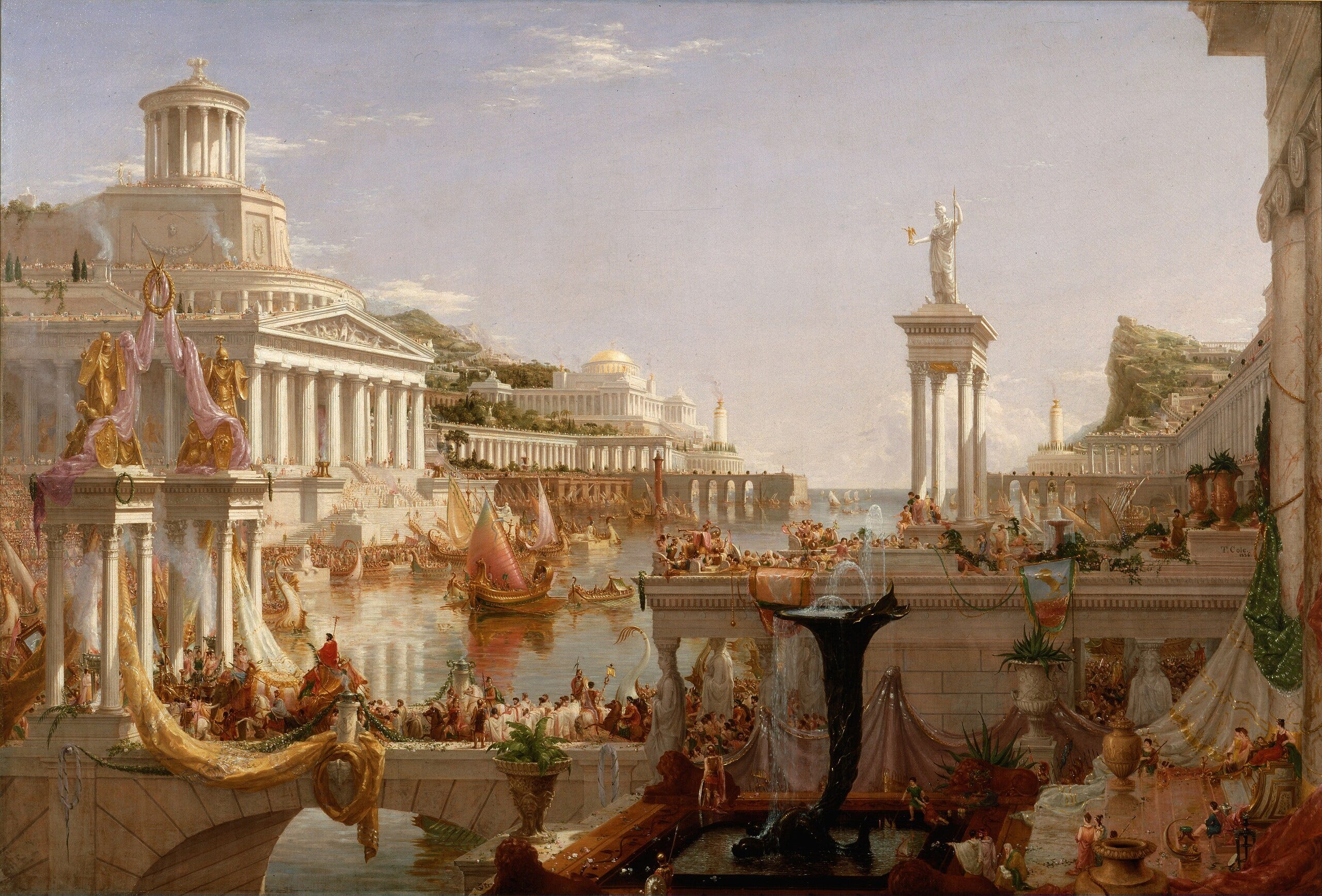
Institutionalism is part of a broader wave of theories and debates that seek to explain the rise and fall of nations, including why certain nations become much more powerful than others, from ancient empires to modern superpowers (see Figure 1). Two of the more prominent thinkers in the institutionalist camp have been the economists Daron Acemoglu and James Robinson. In their 2012 book, Why Nations Fail, Acemoglu and Robinson claim that “countries differ in their economic success because of their different institutions, the rules influencing how the economy works, and the incentives that motivate people.”1 According to them, “Inclusive economic institutions create inclusive markets, which not only give people freedom to pursue the vocations in life that best suit their talents but also provide a level playing field that gives them the opportunity to do so. Those who have good ideas will be able to start businesses, workers will tend to go to activities where their productivity is greater, and less efficient firms can be replaced by more efficient ones.”2
Acemoglu and Robinson are persuaded by the observation of the Austrian economist Joseph Schumpeter that creative destruction is a major driving force in modern capitalism, meaning that new ideas, firms, products, and technologies replace older ones that can no longer compete. Incidentally, Schumpeter actually admits to borrowing the idea from Karl Marx and Friedrich Engels, who argued in The Communist Manifesto that the recurring commercial crises of capitalism required the periodic destruction of older methods of industry and production to pave the way for newer methods and social relations in the next economic order.3 To their credit, Acemoglu and Robinson don’t just focus on economics, but also examine politics as central to the nature of social institutions, writing the following:
Politics surrounds institutions for the simple reason that while inclusive institutions may be good for the economic prosperity of a nation, some people or groups, such as the elite of the Communist Party of North Korea or the sugar planters of colonial Barbados, will be much better off by setting up institutions that are extractive. When there is conflict over institutions, what happens depends on which people or group wins out in the game of politics, who can get more support, obtain additional resources, and form more effective alliances. In short, who wins depends on the distribution of political power in society.4
Acemoglu and Robinson do acknowledge the importance of what they call “critical junctures” in history, such as wars and pandemics. However, they only see these critical junctures as important because of their ability to amplify preexisting small differences among institutional structures in different countries, not because these critical junctures can fundamentally affect the process of institutional formation and destruction in the first place. Their fundamental unit of explanation is and always remains the institution. According to Acemoglu and Robinson, societies can succeed by establishing inclusive economic and political institutions that encourage prosperity across the social spectrum. On the flipside, societies start failing when corrupt elites establish extractive institutions that siphon off wealth from the majority of the population and redirect it toward themselves.
This simple duality is the backdrop for their historical analysis, and they go through many historical examples in the book, from medieval Venice and Spanish America to England and North Korea. Their most important case study is the economic evolution of England from the Middle Ages to the Industrial Revolution. They hold that England’s economic rise boils down to the country supposedly developing inclusive political and economic constitutions that encouraged economic growth, market competition, and technological innovation. They cite various examples throughout English history, such as the signing of the Magna Carta in 1215 and the Glorious Revolution in 1688, for taking England toward a direction of political pluralism and away from a direction of political dictatorship. Over time, they argue, these inclusive and pluralistic institutions culminated in the Industrial Revolution, the ascendance of capitalism, and the birth of the modern world. As Acemoglu and Robinson sum up their views on the Industrial Revolution in England:
The Industrial Revolution started and made its biggest strides in England because of her uniquely inclusive economic institutions. These in turn were built on foundations laid by the inclusive political institutions brought about by the Glorious Revolution. It was the Glorious Revolution that strengthened and rationalized property rights, improved financial markets, undermined state-sanctioned monopolies in foreign trade, and removed the barriers to the expansion of industry.5
How should we judge the plausibility of the institutional theory? Are some nations rich because they have “inclusive” institutions and others poor because they’re governed by extractive elites? The short answer is no. Here are some of the theory’s fundamental flaws.
Where the Institutional School Goes Wrong: Venice as a Case Study
Responsive institutions and governments are obviously important for economic development. No one wants to live under a corrupt government. But institutions are merely a proximate cause of economic growth, not a fundamental one. They are dependent on a broader causal matrix of other material factors, many of which people don’t control at all.
Acemoglu and Robinson have no concrete explanation for what causes responsive or extractive institutions in the first place. They only pick up the story after institutional formation has already occurred. At best, institutional theories are provisional and incomplete, since they do not explain what’s driving the process of institutional formation. They merely look at effects and consequences, making no attempt to ground institutions in a wider causal setting. As a result, institutions in these theories function like theoretical danglers, convenient explanations, or a deus ex machina that just appears out of nowhere to save the show.
To understand why the institutional theory fails to explain anything relevant about the world, let’s look at one of the most prominent examples from the book: Venice in the Middle Ages. Acemoglu and Robinson argue that the initial wave of Venetian prosperity in the Middle Ages was largely driven by inclusive economic and political institutions, such as the commenda contracts that provided upward social mobility for young merchants.6 They posit that that the institutional closure of the Great Council in the late 13th century, known as La Serrata, marked the start of a downward spiral for Venice. From that point forward, only aristocratic elites with hereditary titles could elect the Doge; Acemoglu and Robinson then argue that these elites used their political power to enrich themselves at the expense of other Venetians. And that’s basically their story: the rise and fall of Venice was largely about internal and autonomous developments happening within the city-state, as if Venice existed in a vacuum relative to the outside world.
Their cloistered historical account manages to do the impossible: tell a story about the rise and fall of Venice without once mentioning the Fourth Crusade, the Byzantine Empire, or the Ottoman Empire. The economic dynamics of Venice in the Middle Ages were almost entirely driven by geopolitics. Writing a historical account about medieval Venice without mentioning the Fourth Crusade is like writing a history of the United States in the 20th century without mentioning World War II. The historian Jason Roche emphasizes the importance of the Fourth Crusade very clearly: “Venice’s prosperity in the thirteenth century was largely a product of acquiring Byzantine trading posts in the wake of the conquest of Constantinople during the Fourth Crusade.”7 The Fourth Crusade was the seminal geopolitical event of Venetian history, because the subsequent partitioning of the Byzantine Empire left Venice in control of Crete and other Byzantine territories, thus greatly enhancing its economic and military power. Thousands of Venetians would emigrate to Crete in the 13th century, lured by the prospect of huge land holdings, and the island was a major source of lucrative products that boosted Venetian trade.
The rise of imperial Venice is precisely one of the biggest reasons why the Republic’s political system became insular: because imperial expansion usually breeds greater concentration of political power in elite hands. Acemoglu and Robinson buttress their argument of institutional decline with a throwaway statistic about the population of Venice dropping to 100,000 by the year 1500. This number is highly misleading, first because it ignores that Venice was hit by recurring epidemics that killed many people and forced others to leave the city for different regions within the empire. And the growth of the empire itself is the biggest reason why the city’s population decline is irrelevant. By the 16th century, Venice was an imperial powerhouse that dominated Mediterranean trade (see Figure 2). The total population of the Venetian empire in 1560 stood at around 2.3 million people, compared to about 3 million for England in the same year.8 Venice the empire had a far bigger population by 1560 than it had in 1200. Venice the city-state was the linchpin of the entire imperial system, but it would be wrong to think of Venice in the Late Middle Ages as being just a city-state. Third, plenty of other European cities experienced massive population declines over the same period. London had 55,000 people in 1520, compared to 100,000 before the Black Death.9 Was that decline also due to institutional failure? If so, there seems to have been crippling institutional failure across Europe during the Late Middle Ages. That’s one explanation; a better one is that it simply took Europe a long time to recover from the demographic calamities wrought by the Black Death and subsequent outbreaks of bubonic plague and other epidemics.
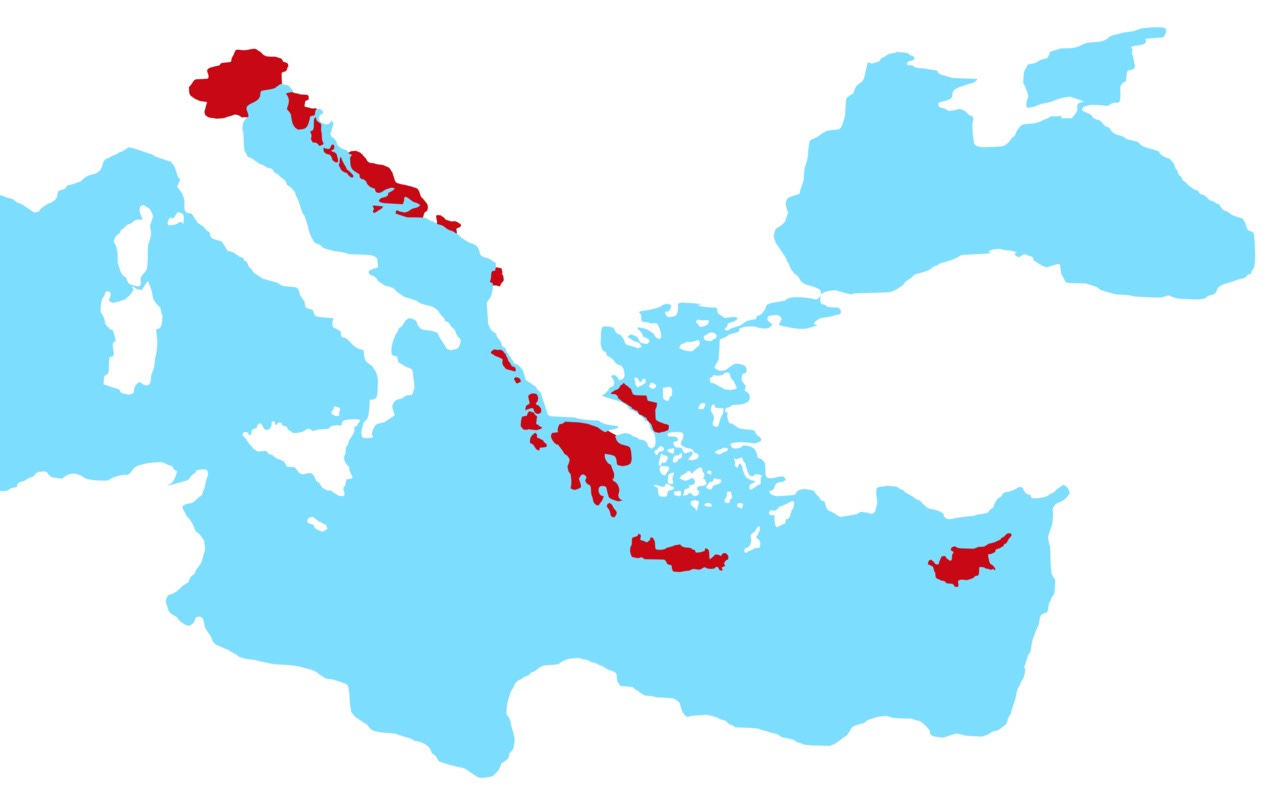
The dominant reasons for Venetian decline in the 16th and 17th centuries can be safely attributed to increasingly ruinous and expensive wars against the Ottoman Empire. Venice lost Crete, Cyprus, and many other important colonial territories in these wars. Although certainly other factors also played a role in the empire’s slide towards irrelevance, wars and geopolitical considerations are by far the main culprits.
War and Politics as Drivers of Institutional Formation
Geopolitical dynamics are a fundamental driver of institutional dynamics. Political systems can change in major ways as they experience wars, conquests, rebellions, and other violent events. British history provides many notable examples of this powerful trend. For example, Parliament cemented its dominance over the monarchy largely as a result of the English Civil War, a brutal conflict which left behind a streak of war crimes, a beheaded king, and 200,000 people dead.
The creation of the Magna Carta is another powerful example of geopolitical dynamics driving institutional reorganization. Acemoglu and Robinson call the Magna Carta “a hesitant step towards pluralism” that they ascribe to the barons standing up to the English king, without ever explaining to the reader exactly where the barons found this incredible courage.10 The reality is that King John only signed the Magna Carta in 1215 because he had lost a disastrous war against the French in the previous year. That defeat became the latest in a string of English military blunders stretching back over a decade, leading to the French conquest of Normandy. The wars were extremely expensive and John had raised taxes to help pay for them. Angry that he’d squandered their time and money on a losing effort, English barons revolted and forced John to sign a document in which he ceded most of his control over the English economy.
This critical history is ignored by Acemoglu and Robinson, and it’s also ignored in most conservative readings of English history, which are so obsessed with emphasizing gradual transformation that they miss the violent and revolutionary moments that set the stage for the later periods of political and economic stability. Another glaring omission in the book is England’s loss in the Hundred Years War, which was actually a series of distinct but related wars that lasted more than a hundred years. Defeat against the French permanently turned the English people into a community of islanders. It’s a notable example of when losing a war can actually be a good thing over the long run. Although the defeat eliminated England’s continental possessions, it also reoriented the country’s strategic priorities towards naval expansion. British leaders gradually relegated the army in importance while heavily investing in the Royal Navy, which eventually became the world’s most powerful.
Another big problem with attributing England’s rise to institutional progress is that much of England’s economic advantage was already in place long before the Glorious Revolution of 1688. London’s population skyrocketed from the 55,000 in 1520 to 475,000 in 1670.11 England’s wool industry also displaced the Flemish and the Italians as the dominant European producer long before 1688.12
Ecological Dynamics and Institutions
The fundamental reason why Western Europe became rich first is because of highly favorable ecological dynamics, resulting from the convergence of various geographical, hydrological, geological, agricultural, epidemiological, and other conditions. Acemoglu and Robinson reject ecological explanations of historical development, focusing their fire on Jared Diamond specifically, on the basis of a supreme strawman fallacy: that only the distribution of flaura and fauna matters for economic development. For example, they argue that many crops and seed varieties critical for agricultural development were found throughout the Eurasian landmass, along with many large mammals that could be domesticated and used for production and transportation.13 Since all major civilizations in Eurasia had access to these natural resources, they should have followed very similar patterns of development, and yet that’s not what happened. That’s their argument in a nutshell, but it’s based on a highly selective reading of what Jared Diamond actually wrote in Guns, Germs, and Steel, nor is it representative of what ecologists believe in general.
Diamond was clear in the beginning of his book that he wanted to explain variations between Eurasia and other continents, a point that Acemoglu and Robinson do acknowledge, not variations within Eurasia itself.14 And ecologists recognize that economic development can be affected by many different factors acting separately or concurrently in space and time, including viruses, bacteria, volcanoes, earthquakes, droughts, hurricanes, climatic variations, rainfall patterns, soil quality, and a million other things. Furthermore, complex feedback loops often develop between human societies and the natural world. We’re seeing them in action right now with global warming, ocean acidification, water shortages, mass extinctions, air pollution, toxic pollution, and other related phenomena. To think that ecology is not the primary driver of human history is to live in denial. Ecological changes have been strongly implicated in the rise and fall of civilizations throughout history by dozens of different major studies.15 Examples include the Late Bronze Age collapse, caused primarily by drought and earthquakes, the Classic Maya collapse, caused chiefly though not entirely by drought, and the Germanic migrations into the Roman Empire, caused chiefly by a cooler climate in Northern Europe starting around the year 200.
In his book, Diamond made a useful distinction between fundamental and proximate causes. Institutional explanations of economic development are basically proximate causes; they’re provisional explanations contingent on specific environmental constraints. The fundamental causes are the material and ecological factors lurking underneath. The Industrial Revolution started in England largely because England had highly favorable conditions for initiating energy-intensive industrialization, as I explained in great detail in this post from earlier in the year. These advantageous conditions included vast and easily accessible coal deposits, high wages that gave an impetus for developing labor-saving technologies, and huge quantities of raw materials from international trade, among other critical factors. It doesn’t matter how many “institutional changes” the monarchs of Hawaii could make; their society would have never been the first to industrialize under the conditions it experienced. Of course, a new economic or technological process can start somewhere in the world and then be adopted by others; that’s totally consistent with ecological theories of economic development. People often bring up Japan as an example that ecology isn’t everything, given how rapidly Japan modernized and industrialized despite various ecological scarcities. But this argument is a red herring because Japan modernized by learning from others. The central point is that certain ecological and material factors are necessary for the initial development of a new economic trajectory, but once that trajectory gets going, it’s totally normal to expect that it might spread to other places around the world. That’s why we have scientific research stations in Antarctica right now. But the Industrial Revolution could have never started in Antarctica!
The institutional dynamics of Latin American history since the Spanish conquests also critically depended on exogenous material factors. Spain conquered the most densely populated areas of the Americas, so it had an incentive to extract as much de facto slave labor as possible from the people who survived the horrible pandemics that brought down pre-European civilizations. By contrast, much of English colonial development in North America was driven by English immigrants working as indentured servants. Consider that 350,000 English people migrated to North America in the 17th century alone, a huge figure that vastly dwarfs Spanish emigration rates.16 All of this happened because North America was sparsely populated by the early 17th century, thanks to decades of European pandemics working their way through indigenous populations. The big idea is that the English relied mostly on their own labor force in the first century of North American colonization, whereas the Spanish didn’t. Slaves didn’t start coming in huge numbers in colonial America until the 18th century; there were about 27,000 in 1700, just 10% of the population.17 The ecological and demographic dynamics of North America meant that the English had basically no choice but to export more “inclusive” institutions, whereas the Spanish adopted methods of violent extraction because that was the most convenient approach, given the vast labor supply at their disposal.
Concluding Thoughts
The notion that extractive elites always sabotage or disrupt economic and technological innovation to protect their power is too reductionist. It’s true that corrupt elites can sometimes eliminate new technologies that could threaten the base of their economic power. Just look at how quickly General Motors literally crushed the EV1 electric vehicle in the 1990s. Acemoglu and Robinson give other good examples in their book. But it’s also true that corrupt elites can aggressively invest in new technologies as a way of augmenting their power over other groups and nations. That’s why the Mongols in the thirteenth century eagerly borrowed and adopted Chinese military technologies on their way to conquering most of Eurasia, including China itself.
Technology can be used to create or to destroy; it has no inherent teleological direction. Human beings are the ones who must decide how it should be used, and usually those decisions are made by humans who have enormous social power. In 1909, the German chemist Fritz Haber invented a method for turning atmospheric nitrogen into ammonia, a critical fertilizer for plant growth. The resulting industrialization of the process by Carl Bosch, and its adoption by countries and companies outside of Germany, substantially boosted agricultural production around the world in the next few decades. Vaclav Smil estimated that 4 billion people are alive now simply because of this invention, although this figure is inaccurate in many ways, and roughly half of the nitrogen atoms in your body come from the Haber-Bosch process.18 At the same time, ammonium nitrate is a powerful explosive, and the German government extensively funded its production during World War I. The Germans, like other countries, also heavily funded the production of chemical weapons that were used to perpetrate war crimes in World War I, and also to expedite the genocidal slaughter of Jews and other groups in the Holocaust during World War II. If they can get away with it, elites will usually try to supplant and expropriate new technologies for the purpose of reinforcing and amplifying their class domination of society. The imposition of political and strategic power is a complex process; sometimes it can involve the destruction of disruptive technologies while other times it can lead to their proliferation.
In their obsession with defending the Western status quo, Acemoglu and Robinson also fail to recognize that plenty of civilizations in the past have experienced long-term economic growth with different institutional models. China under the Song dynasty is a great example. In 999, Chinese tax officials calculated total iron output in Song China to be roughly 32,500 tons, but by 1078 that number had risen to an astonishing 125,000 tons, a four-fold increase.19 The Chinese initially produced iron for agricultural tools and later started focusing more on weapons. In addition to gunpowder, they also produced crossbows and arrows. At its height, Song China may have manufactured about 16 million iron arrowheads every year. Kent Deng writes about the phenomenal performance of the coal industry in Song China by emphasizing its enormous scale: “China’s iron output increased about six-fold from 806 to 1078 with an annual growth rate of 0.7 percent…Song China probably produced the highest iron output per capita in the world until 1750.”20 Historian Arnold Pacey summed up Song China’s technological development by writing that, by the year 1100, “China was undoubtedly the most technically ‘advanced’ region in the world, particularly with regard to the use of coke in iron smelting, canal transport, and farm implements…In all these fields, there were techniques in use in eleventh-century China which had no parallel in Europe until around 1700.”21
Western-style institutions are not necessary for economic growth and development, and indeed the rise of China in modern times has shown that alternative developmental paths are possible, outside the vapid neoliberal formula of austerity, privatization, deindustrialization, and financialization that is currently dragging down most of the Western world. Human history is dynamic and complex, with multiple causal factors converging across time and space to produce a plethora of wide-ranging outcomes. Effective institutions can certainly be part of this story, but never the central core.
Daron Acemoglu and James Robinson, Why Nations Fail (New York: Crown Business, 2012), 73.
Ibid., 76–78.
Karl Marx and Friedrich Engels, The Communist Manifesto, ed. Martin Malia (New York: Penguin, 1998), 57.
Acemoglu and Robinson, Why Nations Fail, 79.
Ibid., 208.
For Acemoglu and Robinson’s overview of Venetian economic and political history in the Middle Ages, see pp. 152–58 of Why Nations Fail.
See Jason Roche, “Consequences,” in The Crusades to the Holy Land, ed. Alan Murray (Santa Barbara: ABC-CLIO, 2015).
See “Population of the Venetian Republic in 1557, by region” from the Statista Research Department, https://www.statista.com/. According to Statista researchers: “By the mid-16th century, the population of the Venetian Republic was roughly 2.3 million people, at a time when Europe’s population was around 70 million. 1.7 million of this population was concentrated in northeast Italy, while the islands of Crete and Cyprus were the most populous overseas territories.” For England’s population figures, see the chart “The Population of England” from the public data repository Our World in Data, https:// ourworldindata.org/.
Robert Allen, The British Industrial Revolution in Global Perspective (Cambridge: Cambridge University Press, 2009), 129–30.
Acemoglu and Robinson, Why Nations Fail, 185.
Allen, The British Industrial Revolution in Global Perspective, 129–30.
Ibid.
Acemoglu and Robinson, Why Nations Fail, 54–55.
Jared Diamond, Guns, Germs, and Steel (New York: W. W. Norton, 1997), 16.
For some prominent papers on the subject, see Harvey Weiss and Raymond Bradley, “What drives societal collapse?,” Science 291/5504 (2001), as well as Peter Douglas et al., “Impacts of Climate Change on the Collapse of Lowland Maya Civilization,” Annual Review of Earth and Planetary Sciences 44 (2016: 613–45. For some of the more notable English-language books on the subject, see Brian Fagan, The Great Warming: Climate change and the rise and fall of civilizations (London: Bloomsbury Publishing, 2008); and Jared Diamond, Collapse (New York: Penguin, 2005).
Malcolm Gaskill, Between Two Worlds: How the English Became Americans (New York: Basic Books, 2015).
Monticello “African Slavery in Colonial British North America,” https://www.monticello.org/slavery/jefferson-slavery/african-slavery-in-colonial-british-north-america/.
Vaclav Smil, Enriching the Earth: Fritz Haber, Carl Bosch, and the Transformation of World Food Production (Cambridge: MIT Press, 2004).
Lawrence Ekeh, Industrialization and National Prosperity, 2010, p. 8-9
Kent Deng, Mapping China’s Growth and Development in the Long Run, 2015, p. 105-6
Arnold Pacey, Technology in World Civilization: A Thousand-Year History, 2001, p. 7
Loved the article, although one small quibble with the final paragraph. I would argue that most technologies do have a teleological direction. For example the automobile encourages a certain form of urban planning and lifestyle to be built up around it, and various media technologies, as Neil Postman argues better than I ever could, also encourage certain modes of thinking. Of course these ways of using technology are not set in stone, but I think it’s a vast simplification to say that technology has no teleology
This is excellent. Sent you an email!